
Weekly Outfit Planning: A 20-Minute Sunday System
Weekly outfit planning works when you do three things: know what is actually clean and wearable, lock your hardest day first, and leave two or three flexible slots for plans that change. Do that once a week, in about 20 minutes, and mornings stop being a negotiation with your closet.
Below is the exact routine, the mistakes that break most plans, and how to decide between paper, a photo album, a spreadsheet or an outfit planner app.
Key takeaways
- Plan from an inventory. You can’t build outfits from pieces you forget you own, so start with a visual list of your clothes.
- Check laundry before you plan, then solve your strictest dress-code day first and fill in the easy days around it.
- Plan by scenario (office, brunch, evening) rather than by date, so a canceled meeting doesn’t wreck the whole week.
- Leave room: three solid looks built on a few hero pieces beat seven rigid outfits.
- Pick a tool you will open daily. A diary-style app, a notes file and a printed grid all work if you actually use them.
Table of Contents
- Why planning a week of outfits works
- Step 1: Take inventory before you plan anything
- Step 2: Run a 15-minute closet reset
- Step 3: Check the laundry cycle first
- Step 4: Lock your hardest day, then fill in the rest
- Step 5: Plan by scenario, not by date
- Step 6: Build around hero pieces and leave slack
- Choosing your tool: paper, photos or an app
- Our perspective: plan with what you own, shop with a purpose
- Weekly planning with Style To Cart
- Common mistakes that break a weekly plan
- Get inspiration without starting from scratch
- A simple Sunday routine
- FAQ
- Sources
Why planning a week of outfits works
The appeal is the same as meal prepping. Goop compares it to meal prepping: a little effort up front, then quick, calm mornings. The deeper benefit is that you make the decisions once, when you are rested and can see your whole closet, instead of at 7:40 a.m. with a train to catch.
Planning also changes what you buy. When you can see every outfit your closet already makes, gaps become obvious and impulse purchases lose their pull. If that is your goal, our guides on shopping your closet first and budget outfit planning go deeper.
Step 1: Take inventory before you plan anything
Stylebook co-founder Jess Atkins argues that a digital inventory is the most important step in wardrobe management: you can’t plan with items you don’t know you have, and a visual list lets you build outfits from what is available.
You don’t need to photograph 200 items on day one. Start smaller:
- Photograph the pieces you reach for most: tops, bottoms, shoes and one or two layers.
- Add anything you own but keep forgetting. These are usually the most valuable finds.
- Skip clothes that don’t fit or that you dislike. A planning inventory is not an archive.
- Add more over time, a few items whenever you wear or wash them.
Once 30 to 40 core pieces are in one place, you can already plan a full week.
Step 2: Run a 15-minute closet reset
A plan built on a messy closet falls apart on Tuesday. Professional organizers quoted by Real Simple recommend a 15-minute weekly reset: rehang misplaced items, tidy the shoe rack and make sure laundry is put away. It makes picking outfits quicker because everything is where you expect it.
Do the reset right before you plan. By the time you sit down, you know exactly what is clean, pressed and findable.
Step 3: Check the laundry cycle first
The most common reason weekly plans fail is ignoring laundry. Dressed’s planning guide points out that an outfit needing a piece that is currently in the hamper leads straight to morning panic.
Before you commit to anything, ask:
- Which key pieces are in the wash or at the dry cleaner?
- Will your one good pair of black trousers be clean by Thursday?
- Do you do laundry midweek? If so, you can plan a second wave of outfits for Thursday through Sunday.
If you wear the same jeans and the same blazer often, plan around their wash day, not the other way around.
Step 4: Lock your hardest day, then fill in the rest
Don’t plan Monday to Sunday in order. Plan around the most constrained event: find the day with the strictest dress code, such as a client presentation, an interview or a wedding on Saturday, and solve it first. Everything else gets easier.
Here is a sample week for someone with a hybrid office job:
| Day | Scenario | Plan |
|---|---|---|
| Monday | Team meeting at the office | Tailored trousers, knit top, loafers |
| Tuesday | Work from home, errands | Jeans, tee, cardigan, sneakers |
| Wednesday | Client presentation (hardest day, locked first) | Blazer, silk blouse, dark trousers, ankle boots |
| Thursday | Office, drinks after | Wednesday’s trousers, new top, jewelry swap |
| Friday | Casual office | Midi skirt, tee, denim jacket |
| Weekend | Brunch, dinner out | Two flexible slots, decided Friday night |
Notice that Thursday reuses pieces from Wednesday. That is the point: repetition across different combinations is what makes a week of outfits feel effortless.
Step 5: Plan by scenario, not by date
Industry professionals suggest moving from “outfit by date” to “outfit by scenario”, such as meetings, brunch or an evening out. Scenario outfits are modular. If Wednesday’s lunch moves to Friday, you swap the outfit, not rebuild the plan.
In practice, make a short list of scenarios your week actually contains and give each one a ready outfit:
- Work, in person: your most polished look
- Work, from home: comfortable but camera-ready on top
- Errands and casual: the outfit you can wear in the rain
- Evening: a layer or accessory swap that upgrades a daytime outfit
- Weekend: left open on purpose
On a weather-heavy week, add a column for temperature. A plan that ignores a 25-degree drop is just a wish.
Step 6: Build around hero pieces and leave slack
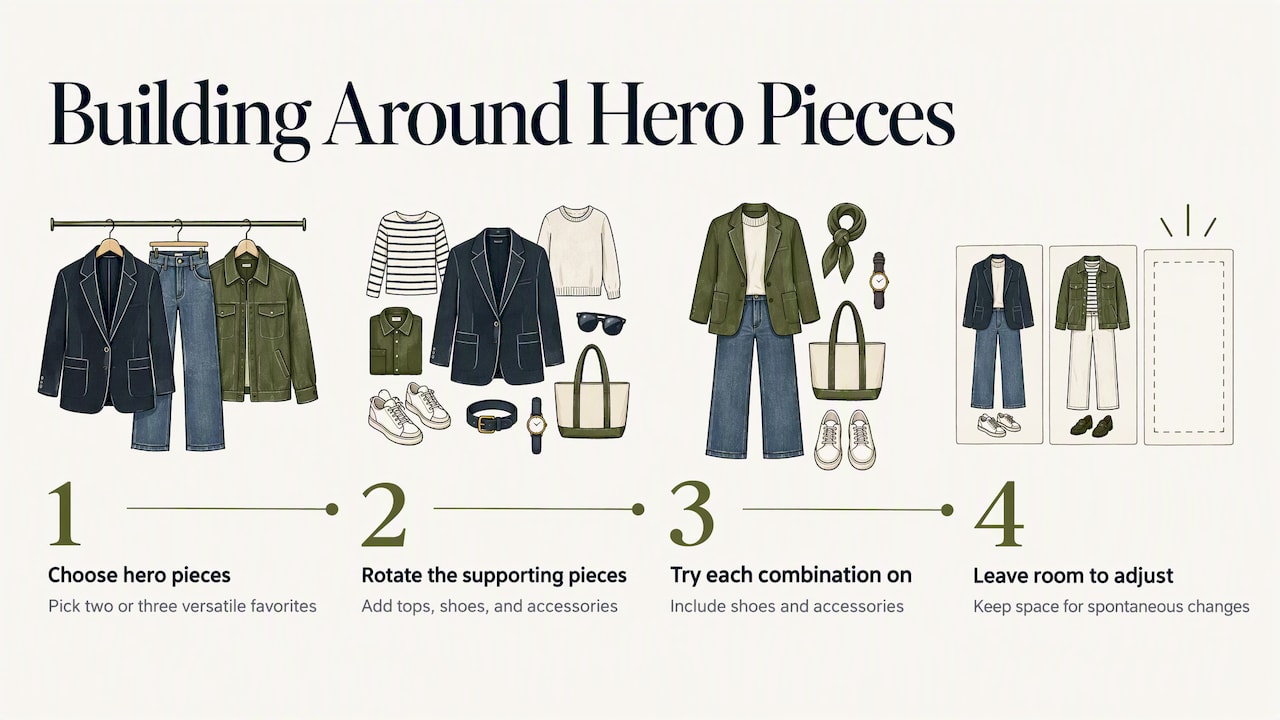
You don’t need seven unique outfits. Travel stylists advise curating hero pieces and building roughly three versatile looks as a base, leaving room for spontaneous adjustment. The same logic works for a normal week at home.
Pick two or three hero pieces: a well-fitting blazer, great jeans, a jacket you love. Then rotate tops, shoes and accessories around them. Try everything on before you commit, including shoes and accessories. If a combination looks good in your head but not in the mirror, you want to know on Sunday, not Wednesday.
Packing for a trip is the same exercise in miniature. Our travel capsule wardrobe guide shows how to get more outfits from 10 to 12 pieces.
Choosing your tool: paper, photos or an app
There is no right answer, only the one you will open every day. Here is how the main options compare.
| Method | Best for | Weak spot |
|---|---|---|
| Printed weekly grid or notebook | People who like to write things down | No pictures of the clothes, hard to rearrange |
| Photo album or screenshots | Quick start | Gets scattered fast, hard to search |
| Spreadsheet | Detail lovers | Tedious to maintain, no visuals |
| Outfit planner app | Anyone with 50+ pieces | Needs an initial setup session |
If you go with an app, one 2026 comparison splits them into two types: diaries you fill in yourself and generators that choose for you. Decide which you want before comparing prices. The same review notes that some free tiers cap at 100 items, which matters if you own a lot of clothes. A Wirecutter reviewer describes using tags in a digital wardrobe app to filter outfits by weather, activity or events in a weekly routine, a useful trick whatever tool you pick.
If you prefer a more physical approach, pair your plan with pieces you love wearing. Locally themed, easy-to-layer basics, such as the sweatshirts and hoodies from Block Island apparel, are the kind of casual anchors that fill the “errands and weekend” slots in a weekly plan without much thought.
Our perspective: plan with what you own, shop with a purpose
We built Style To Cart around a simple observation: most people’s shopping lives in scattered notes and screenshots, and their closets live in their heads. Neither helps you get dressed. So we put both in one place: save items from any store, build outfits from the pieces you already own, and see price drops on what you have saved.
Our view is that weekly outfit planning is only half about the week. The other half is what it shows you. When you plan five days and keep reaching for the same three tops, you have learned something real about what you wear. When you cannot finish Thursday’s outfit because you have no suitable shoes, you have found a genuine gap, not a vague urge to shop.
That is why we think a plan should come before a purchase. Add the piece you are considering to your wishlist, try it with outfits you already have, and only then watch for a price drop. Our guides on the three outfit test before you buy and buying anchors before extras explain how we think about it.
— Wendy
Weekly planning with Style To Cart
Style To Cart is a fashion management app for the exact problem this article describes. You can build outfits with pieces you already own, keep wishlist items from any store in one place, track price drops on saved pieces, and upload an outfit photo to find similar styles. If you want your week of outfits and your wishlist in the same place, try Style To Cart.
Common mistakes that break a weekly plan
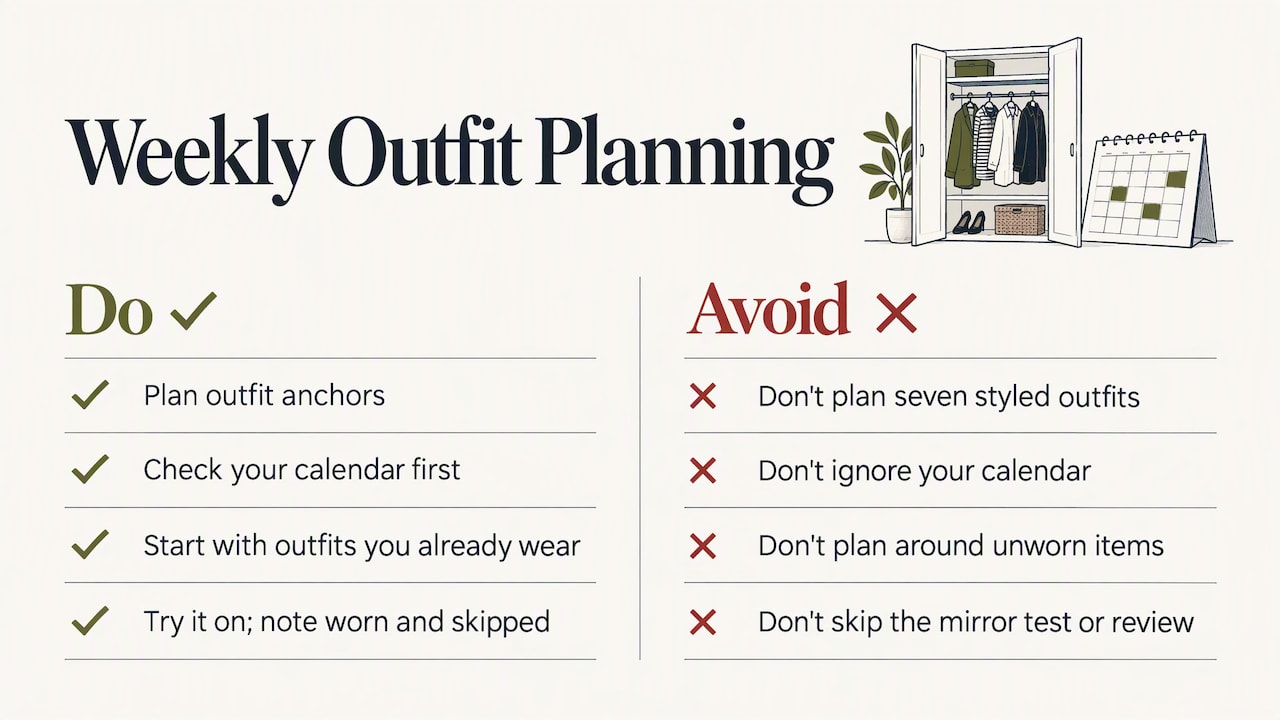
Planning too much. Seven fully styled outfits with matching jewelry is a project, not a habit. Plan the anchors and let the rest flex.
Ignoring your actual week. Look at your calendar before you open your closet. An outdoor event, a long commute or a gym session changes everything.
Planning from fantasy. If you never wear heels, they don’t belong in Friday’s slot. Anuschka Rees-style outfit formulas work because they start from combinations you already wear repeatedly, such as blazer, jeans and boots, and then check them against your style goals.
Skipping the mirror test. Try the outfit on once. Ten seconds on Sunday saves ten minutes on Wednesday.
Never reviewing. At the end of the week, note what you wore and what you skipped. After a month, you have a clear map of your real style. If you are still working out what that is, our 10-minute style finder is a good place to start.
Get inspiration without starting from scratch
Sometimes the hardest part is not combining pieces but knowing what you want your outfits to look like. A mood board helps, as long as it turns into real outfits; we cover that in outfit mood boards that become wearable looks. If you have a photo of an outfit you love, crop it first and treat the results as leads to find similar pieces, then check what you already own before buying anything.
A simple Sunday routine
Here is the whole system in one place, about 20 minutes:
- 5 minutes: run the closet reset and check what is clean.
- 2 minutes: look at your calendar and name your scenarios.
- 5 minutes: lock the hardest day’s outfit.
- 5 minutes: fill in the other days from your hero pieces, reusing items in new combinations.
- 3 minutes: try on anything uncertain and leave one or two days open.
On Wednesday, spend two minutes adjusting for weather and laundry. At the end of the week, note what you didn’t wear and why.
A monthly view is optional. If you want one, treat it as a rough calendar of events and dress codes, not a list of outfits. The detailed planning belongs to the week, when you know the forecast and your schedule.
FAQ
Is there an app to help me put outfits together?
Yes. Outfit planner apps generally let you photograph or import your clothes, combine them into looks and schedule them on a calendar. Some are diaries you fill in yourself, others suggest outfits for you. Style To Cart lets you build outfits from pieces you own and also tracks price drops on items you want.
How far ahead should I plan outfits?
A week is the sweet spot for most people because you know your schedule and the forecast. Plan your hardest day first and leave a couple of open slots. For travel, plan the whole trip before you pack.
How do I plan outfits if my schedule changes a lot?
Plan by scenario instead of by date. Prepare one ready outfit each for work, casual, and evening, then swap them as plans shift. This way a canceled meeting never means starting over.
How long does weekly outfit planning take?
About 20 minutes once your closet is organized, and less as your digital inventory grows. The first session takes longer because you are photographing and sorting your clothes. After that, it is mostly reuse and small adjustments.
Sources
- Goop: What to Wear Every Day of the Week
- Conscious Life & Style: How to Make the Most of Your Wardrobe with Jess Atkins
- Real Simple: Want a Tidier Closet? Try This 15-Minute Reset
- Dressed: Weekly Outfit Planner
- Fashion Week Online: How to Plan Your Fashion Week-Inspired Wardrobe
- Kelly Cutrone: How to Pack for Fashion Week in 2026
- UPeak: Best outfit planner apps compared
- Wirecutter: I Catalogued My Wardrobe Clueless-Style