Find Your Style in 10 Minutes, Then Build a Closet System
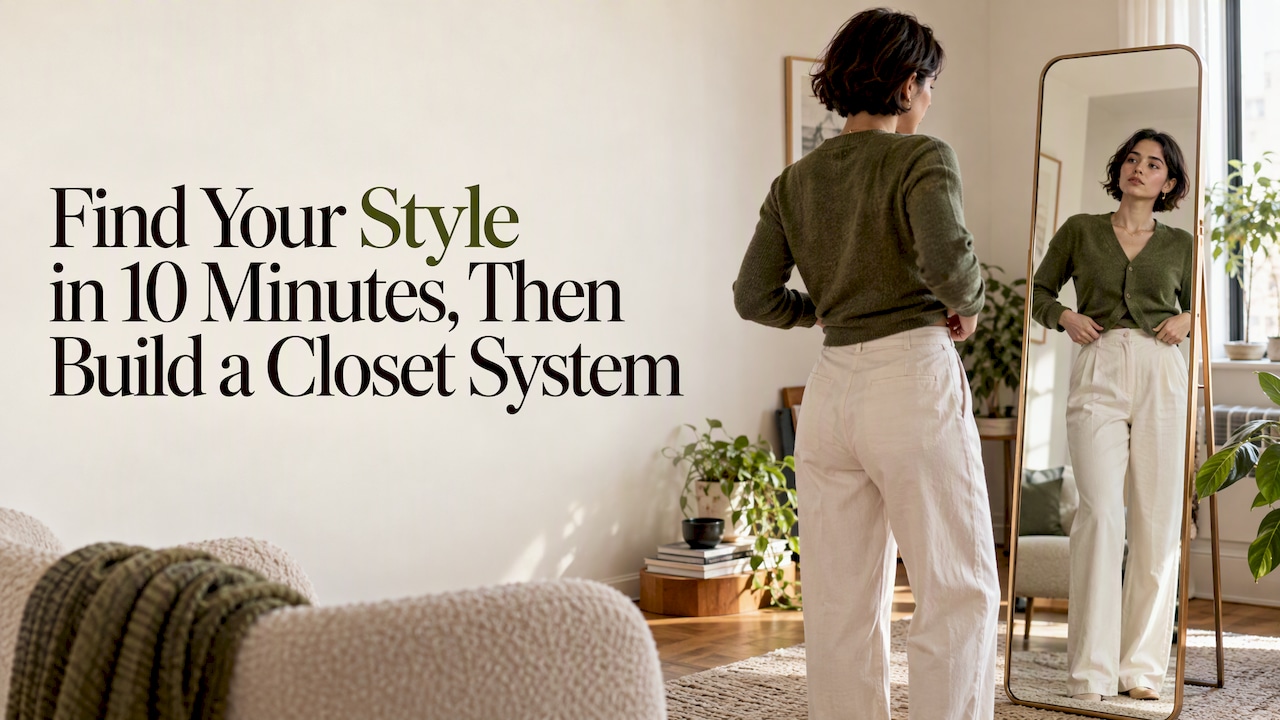
Take a ten minute mini quiz or pick three words that describe how you want to dress, then test them against your closet this week. Success looks like a short style description, two or three outfit formulas you can repeat, and a list of three gaps in your wardrobe. The steps below walk through the quiz, the frameworks stylists actually use, and a workflow for turning saved inspiration into a closet that works.
TL;DR:
- Treat the quiz result as a starting hypothesis: photograph your favorite outfit, compare it with your closet, and note three specific gaps.
- Build two or three repeatable outfit formulas from your favorite look, then use three honest style words to judge whether new purchases fit your direction.
- Audit unworn pieces, keep those that fit and match a style word, and limit your gap list to three to seven items tied to formulas.
- Photograph outfits for two or three weeks, then use repeated colors, silhouettes, or accessories to refine your formulas rather than chase trends.
- Wait 48 hours before buying wishlist items, compare each candidate with two or three pieces you own, and set a price alert for worthwhile gaps.
Table of Contents
- Take the Ten Minute Style Check
- Frameworks That Keep Your Style Consistent
- Run a One-Day Wardrobe Audit
- Collect Inspiration and Track What You Actually Wear
- How a Fashion Management Tool Fits Every Step
- Integrating Favorite Pieces Into New Looks
- Organizing and Visualizing Your Wardrobe Digitally
- Using Price Drop Alerts to Time Purchases
- Mixing New Finds With What You Already Own
- Letting Your Style Evolve Without Losing Consistency
- Why Systems Beat Trend-Chasing
- Build Your Style System With Style To Cart
- FAQ
- Sources
Take the Ten Minute Style Check
Answer these quickly, without overthinking. Your first instinct is almost always more honest than your third guess.
- Which silhouette feels most like you: fitted, relaxed, or a mix of both?
- What shoes do you reach for most: sneakers, boots, or flats and heels?
- Which color palette do you gravitate toward: neutrals, brights, or deep jewel tones?
- Do you lean toward solid colors, subtle texture, or bold prints?
- Do you prefer structured fabrics or soft, draped ones?
- What’s your go-to accessory: a watch, statement jewelry, or a scarf?
- When you feel best in an outfit, is it because it’s comfortable, polished, or unexpected?
Your answers tend to cluster into a few recognizable outcomes: classic (fitted, neutral, structured), elevated casual (relaxed with polished touches), bold minimal (clean lines, statement color or shape), or soft romantic (draped fabrics, softer palettes). None of these labels are rigid categories. They’re a starting point you can adjust once you see your closet in front of you.
Once you have a label, do three things right away:
- Photograph the outfit you wear most when you want to feel like yourself.
- Save three inspiration images that match the feeling of that outfit.
- Write down three gaps you notice between that photo and the rest of your closet.
Frameworks That Keep Your Style Consistent
The quiz gives you a direction. These frameworks keep you from drifting back into random purchases.
The three-word method, a framework widely recommended by stylists as an effective shopping filter, asks you to pick three honest adjectives that describe how you want to look and feel, not how you think you should look. Try pairs like “clean, warm, relaxed” or “sharp, tailored, confident.” Test each word against a recent purchase: did it fit the word, or did you buy it on impulse?
A handful of outfit formulas translate those words into real combinations you can repeat:
- Blazer, tee, tapered jean: elevated casual.
- Button-down, straight trouser, loafer: classic.
- Oversized sweater, slip skirt, boot: soft romantic.
- Structured tank, wide trouser, minimal sneaker: bold minimal.
- Denim jacket, graphic tee, relaxed chino: easy everyday.
Capsule thinking takes this further: instead of buying pieces in isolation, you build around a small set of items that all combine with each other. This cuts decision fatigue because every new piece has to answer one question: does it work with at least three things I already own?
Pro Tip: Pull out your most-worn outfit and ask what makes it work: the fit, the color, or the silhouette. That single answer often reveals your real style markers faster than any quiz, a method also recommended by stylists quoted in The Guardian.
Run a One-Day Wardrobe Audit
A wardrobe audit turns your style words into a closet that actually supports them. Block out a few hours and follow these steps:
- Empty your closet completely so you can see everything at once.
- Try on anything you haven’t worn in the last six months.
- Sort each piece into keep, alter, or donate using fit, frequency of wear, and how it makes you feel.
- Set aside anything that needs tailoring before it goes back in rotation.
- Build a gap list based on what’s missing to complete your outfit formulas.
A few rules make the sorting faster:
- Keep anything that fits well and matches at least one of your three words.
- Alter pieces with good fabric or cut but a fit issue you can fix, like hemming or taking in a waist.
- Donate anything you haven’t worn in a year or that doesn’t match your current style direction.
Cap your gap list at three to seven items tied directly to your outfit formulas, not general wish-list pieces. For a longer walkthrough of this process, our guide to building a closet you actually wear covers how to prioritize those gaps against your budget.
Collect Inspiration and Track What You Actually Wear
Inspiration only helps if you curate it with intention instead of saving everything that catches your eye.
- Save images from Pinterest boards, outfit posts, or street style photos that match your three words specifically, not just anything stylish.
- Photograph your outfits daily or weekly for two or three weeks to see what you repeat.
- Apply a 48-hour cooling-off rule before buying anything from your wishlist to separate real interest from impulse.
After a couple of weeks, look back at your saved images and outfit photos together. Patterns usually show up fast: a recurring color, a repeated silhouette, or the same one or two accessories. Framing purchases as long-term investments in a few versatile pieces, rather than frequent small buys, tends to increase follow-through on style and sustainability goals, since shoppers who think in terms of quality over quantity report higher satisfaction with what they buy.
Pro Tip: Keep inspiration and outfit photos in the same place so patterns are easy to compare side by side instead of scattered across apps.
How a Fashion Management Tool Fits Every Step
Each step above works better with a central place to hold it all. A fashion management tool lets you save inspiration images and product links, tag saved items to the outfit formulas you built in the frameworks section, and keep a prioritized gap list in one wishlist instead of scattered screenshots.
A simple workflow looks like this:
- Save five inspiration images that match your three words.
- Tag two of them to specific outfit formulas, like “blazer, tee, tapered jean.”
- Add one gap item to your watchlist and turn on price drop alerts for it.
Microtrend churn makes it harder to buy with confidence, which is exactly why a centralized system for tracking inspiration and gaps matters more than chasing every new trend that appears.
Integrating Favorite Pieces Into New Looks
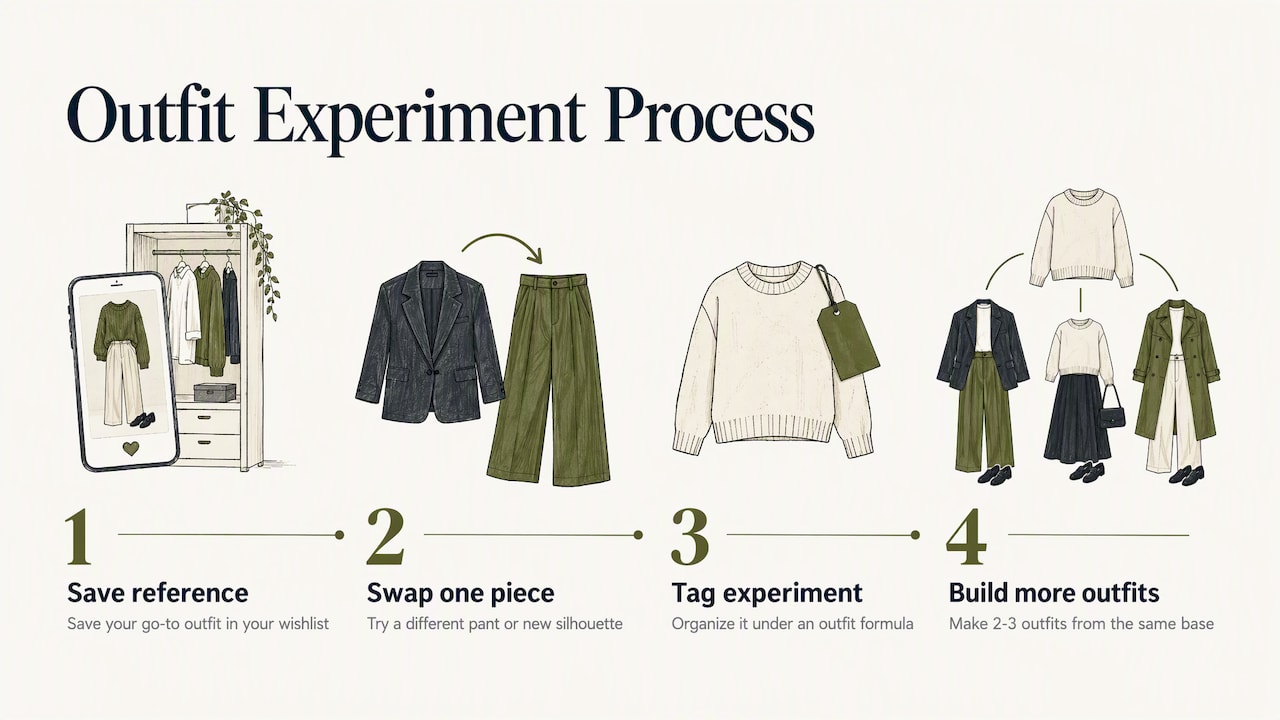
The outfit you photographed during your mini quiz is a starting point, not a finished answer. Saving it in a fashion management app can help you build new combinations around it without losing the thread of what already works.
Start by saving that go-to outfit as a reference point in your wishlist. From there, swap one piece at a time: try the same blazer with a different pant, or pair your favorite boots with a silhouette you haven’t tried yet. Tagging each experiment to one of your outfit formulas keeps the variations organized instead of turning into a pile of untested ideas.
This matters because the pieces you already love and wear often are your most reliable style markers. Rather than treating them as fixed, use them as an anchor while you test new pairings around them. When a combination works, you can tag it to the matching formula and build out two or three more outfits from the same base. Over a few weeks, this turns one favorite piece into a small, repeatable system instead of a single outfit you wear the same way every time.
Organizing and Visualizing Your Wardrobe Digitally
A closet is hard to see clearly when it’s a mix of hangers, drawers, and half-remembered online carts. Saving items digitally in a fashion management app gives you one visual layout of everything you own or want, organized by category, formula, or style word instead of by where you happen to store it.
A few habits make this more useful:
- Upload photos of key wardrobe pieces alongside saved inspiration so you can compare them directly.
- Group saved items by outfit formula rather than by store or brand.
- Review your wishlist monthly and remove anything that no longer matches your three words.
Seeing your wardrobe laid out this way makes gaps obvious fast. If every saved “classic” item is a top and you have no matching bottoms, that’s a clearer signal than scrolling through old screenshots trying to remember what you already own.
Using Price Drop Alerts to Time Purchases
Once you have a gap list, price drop alerts turn patience into savings instead of waiting around guessing. Adding your top gap items to a watchlist and letting alerts tell you when the price moves instead of checking manually can help manage purchases.
This works especially well paired with the 48-hour cooling-off habit: if an item is still on your mind after two days, a price drop alert gives you a concrete reason to act rather than buying on impulse the moment you see it. Quality and design remain the top purchase drivers for most shoppers, which means waiting for the right price on a well-made piece tends to pay off more than buying something lower quality right away. For more on building a gap list around pieces worth waiting for, see our guide to budget-conscious outfit planning.
Mixing New Finds With What You Already Own
A new purchase only earns its place if it works with at least a few things you already own. Before buying anything on your gap list, check it against two or three existing pieces in your wishlist to confirm it completes an outfit formula rather than starting a new one.
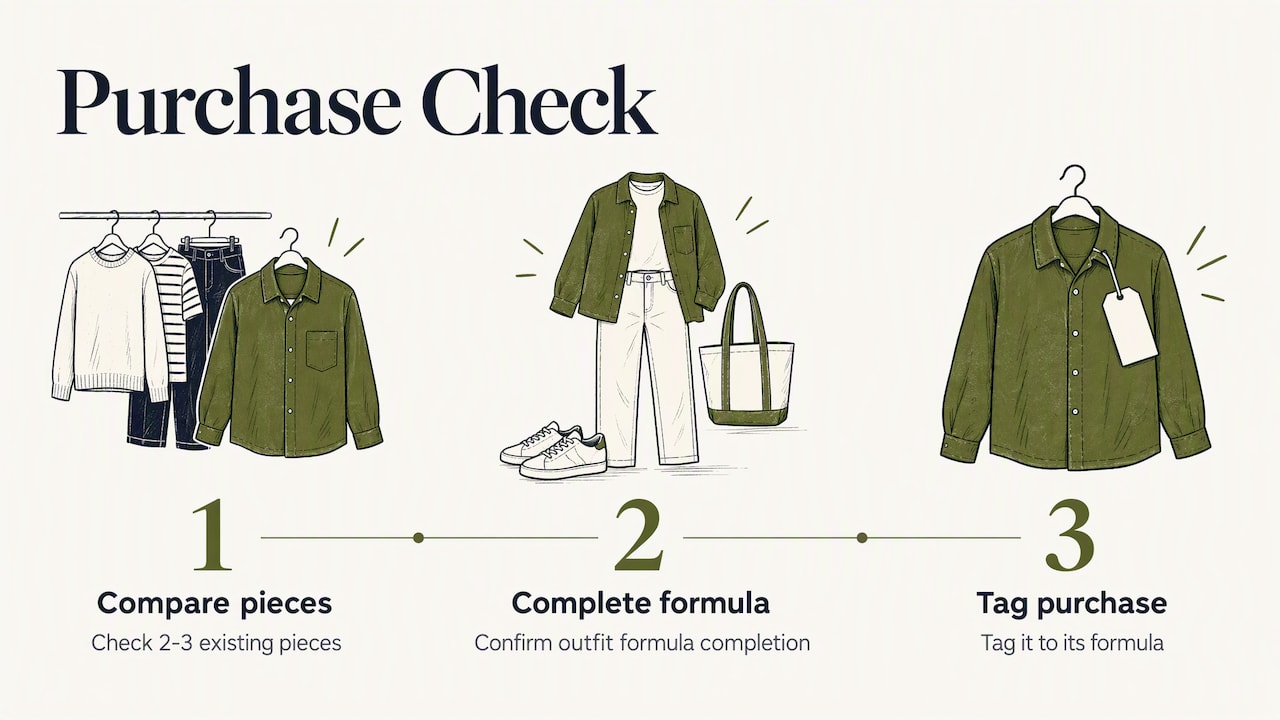
This is also where slow fashion principles make a practical difference: choosing durable, well-made pieces that pair with multiple items in your closet, rather than single-use trend buys, keeps your wardrobe cohesive over time. Left for Left’s breakdown of slow fashion principles covers how durability and intentional design support this kind of long-term mixing. Tag each new piece to the formula it completes as soon as you buy it, so the next time you’re getting dressed, the combination is already mapped out instead of reinvented from scratch.
Letting Your Style Evolve Without Losing Consistency
Your three words won’t stay exactly the same forever, and that’s fine. Revisit them every few months, especially after a season change or a shift in your routine, and adjust one word at a time rather than overhauling the whole system.
Our stylist notes on the pieces worth rebuying cover how small, repeated purchases often signal a style that’s settling rather than one that’s stuck. Use your Style To Cart wishlist history as a record of that evolution: look back every few months at what you’ve saved, tagged, and bought, and you’ll see your style shift in real data instead of guesswork. For more ongoing style guidance, our blog covers deeper breakdowns of frameworks and seasonal wardrobe planning.
Why Systems Beat Trend-Chasing
Most people treat personal style like a destination they’ll arrive at once they find the right quiz or the right influencer to copy. It isn’t. It’s a small set of habits, three honest words, a few outfit formulas, a habit of checking new buys against what you own, that you adjust slightly as your life changes.
Try one small habit this week: photograph three outfits you actually wear and look for what repeats. That’s more useful than any single quiz result.
— Wendy
Build Your Style System With Style To Cart
Everything in this guide works better with one place to hold it. Once you’ve picked your three words and run your audit, save your go-to outfit and a handful of inspiration images in a fashion management tool, tag them to the outfit formulas you’re testing, and add your top gap items to a watchlist.
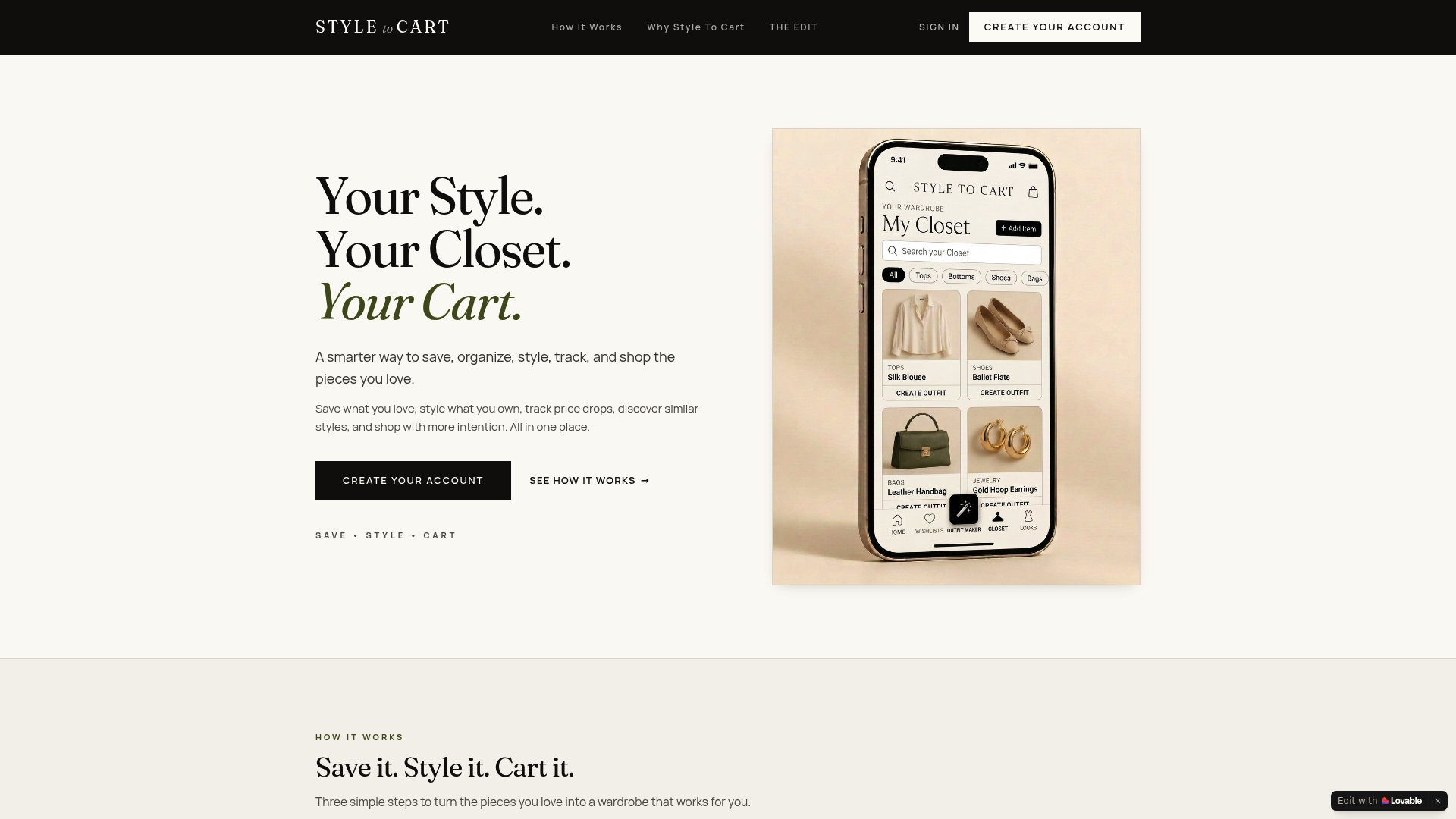
A few ways to put this to use right away:
- Save five inspiration images that match your style words and tag two to formulas.
- Add one gap item to your watchlist and turn on price drop alerts.
- Check back in two weeks to see which saved pieces you actually bought.
Start building your wishlist on the Style To Cart landing page and turn this week’s outfit photos into a system you’ll actually use.
FAQ
How accurate is a style quiz at finding my real style?
A quiz gives you a strong starting label, but accuracy improves once you test that label against outfits you already wear and love. Treat the quiz result as a hypothesis to confirm during your wardrobe audit, not a final answer.
What should I do after I get my style quiz results?
Photograph your go-to outfit, save a few inspiration images that match the result, and list three gaps between that outfit and the rest of your closet. From there, run a wardrobe audit to confirm the label actually fits your existing pieces.
How many outfit formulas do I need to feel like I have a style?
Two or three repeatable formulas are usually enough to start, since each one can be varied with different colors or pieces you already own. Stylists recommend building formulas around a go-to outfit you already wear well, which The Guardian covers in detail.
What is the three-word method and why do stylists recommend it?
The three-word method asks you to choose three honest adjectives that describe how you want to dress, then use them as a filter before buying anything new. It’s a widely used framework because it reduces decision fatigue and speeds up both shopping and getting dressed.
Can an app like Style To Cart actually help me find my style?
Style To Cart centralizes your saved inspiration, outfit formulas, and gap list in one wishlist, which makes patterns in your style preferences easier to see than scattered screenshots. It also tracks price drops on saved items, so you can wait for the right price on pieces that match your style words instead of buying on impulse.
Sources
- When sustainability meets the wallet: Economic trade-offs in consumers’ willingness to pay for sustainable fashion
- How to actually find your personal style in 2026 | CNN
- The three-word method for personal style | The Everygirl