
Travel Capsule Wardrobe: Build More Outfits From 10–12 Pieces
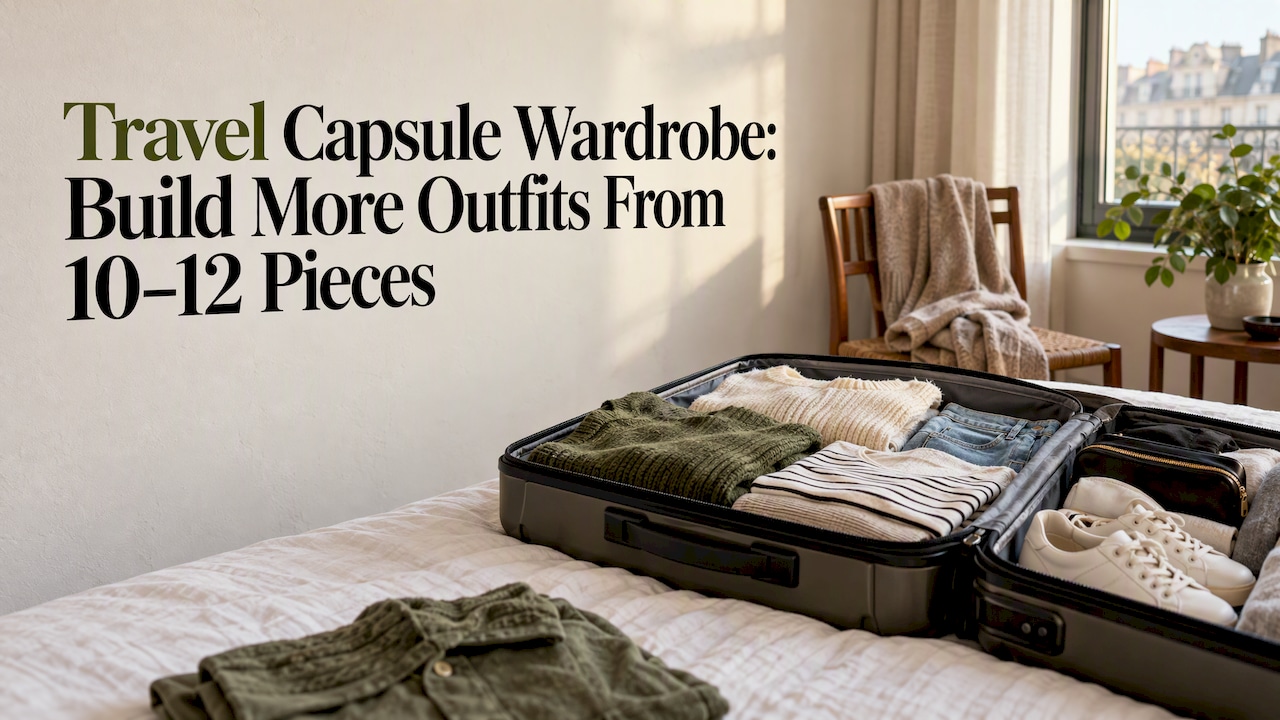
A travel capsule wardrobe is a small set of coordinated clothes built around one neutral palette, designed so every piece mixes with nearly every other piece. For most trips, aim for a small core of pieces plus a few layers and accessories to maximize outfit variety. This set packs into a carry-on, cuts decision fatigue to almost nothing, and still gives you enough variety to avoid repeating the same outfit twice.
TL;DR:
- For a typical weeklong trip, build around four tops, three bottoms, one dress or jumpsuit, two layers, and two pairs of shoes.
- If you have washer access partway through the trip, pack 10 core pieces; without laundry, add one or two tops and quick drying fabrics.
- Limit shoes to two pairs, adding a third only for a specific activity such as hiking; wear the bulkiest pair and jacket while traveling.
- Choose one neutral base with one or two accents, then keep only pieces that pair with at least three other items.
Table of Contents
- Core rules that make a travel capsule work
- Step-by-step checklist to build a 10 to 12 piece capsule
- Ready-to-use capsule templates and outfit combos
- How to pack the capsule so it survives the trip
- Adjusting the capsule for different trip types
- Building the capsule digitally with Style To Cart
- Why I still pack this way after every trip
- Plan and shop your capsule in one place
- FAQ
- Sources
Core rules that make a travel capsule work
A capsule only works when the pieces actually talk to each other. Four principles decide whether your suitcase turns into a flexible wardrobe or a pile of clothes that don’t combine.
Start with color. Pick one neutral base (navy, black, olive, or beige) and add one or two accent colors that pair with everything else you packed. Style experts recommend starting with basics and choosing a compact palette specifically because it maximizes how many outfits you can build from a small number of items. A single accent color, like a rust scarf or a cobalt top, does more work than it looks like it should: it changes the mood of an outfit without adding a new garment to track.
Fabric choice matters as much as color. Merino wool and performance synthetic blends resist odor, pack down small, and dry overnight if you need to hand-wash something in a hotel sink. REI’s packing guidance points to these fabrics specifically because they let you wear a piece multiple times between washes without it looking or smelling worn.
Layering extends your range further than adding new pieces would. Think in three bands:
- Base layer: t-shirts, tank tops, or a lightweight long-sleeve that sits against your skin.
- Mid layer: a cardigan, light sweater, or button-down that adds warmth and changes the silhouette.
- Outer layer: a packable jacket or blazer that handles wind, air conditioning, or a dressier moment.
Shoes deserve their own rule because they eat the most suitcase space per item. REI’s guidance suggests limiting footwear to two or three pairs and choosing styles that double up: one walking shoe that also works for a casual dinner, one sandal or dressier flat, and an optional third pair only if your itinerary genuinely requires it (hiking boots for a trail day, for example).
Pro Tip: One statement accessory, like a patterned scarf or a bold necklace, can turn the same three-piece outfit into three distinct looks across three days.
Step-by-step checklist to build a 10 to 12 piece capsule
Building a capsule works best when you reverse-engineer it from your actual itinerary rather than packing on instinct. Start by mapping out your trip length, the climate, and how often you’ll have access to laundry. A 7 to 10 day trip with no laundry access needs a different count than the same trip with a washer at your Airbnb.
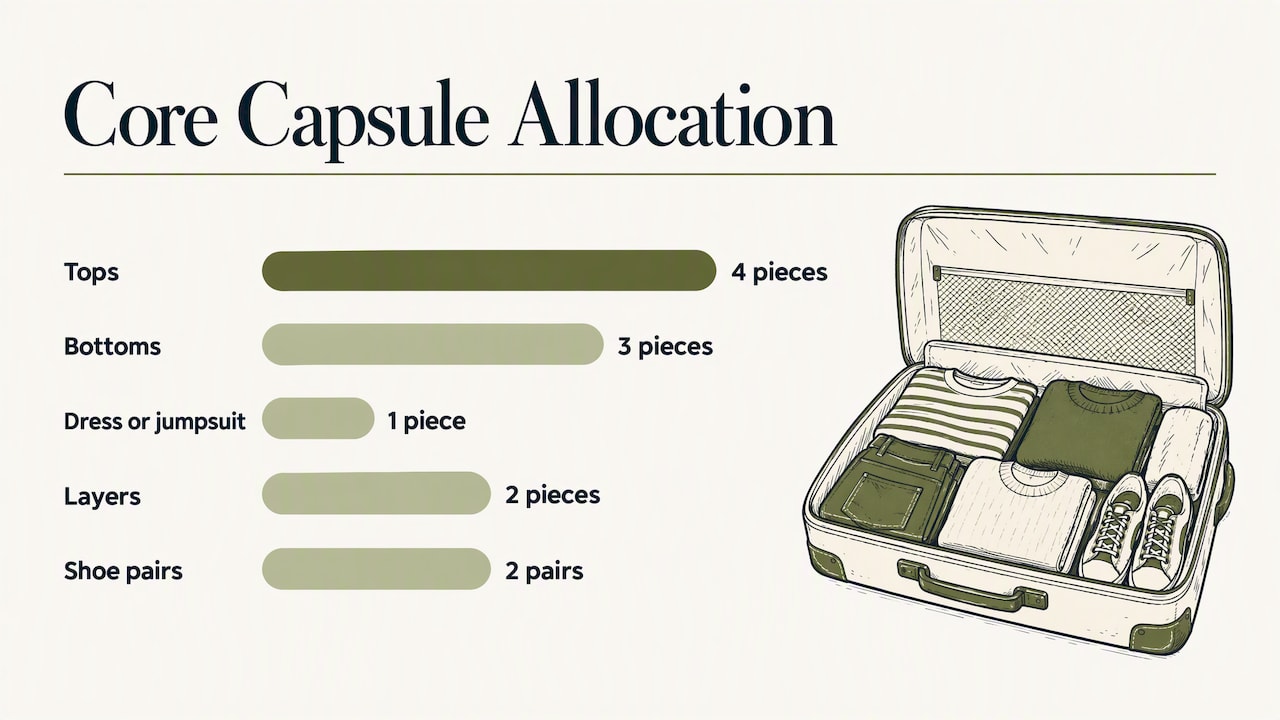
Once you know your constraints, slot pieces into categories rather than picking items one at a time. A 12-piece core for a typical week-long trip breaks down roughly like this:
- Four tops (mix of short sleeve, long sleeve, and one dressier option).
- Three bottoms (one pair of pants or jeans, one pair of shorts or a skirt, one versatile pair for layering).
- One dress or jumpsuit that works for both daytime and evening with a quick accessory swap.
- Two layers (one cardigan or sweater, one packable jacket).
- Two pairs of shoes (one walking shoe, one dressier or sandal option).
- Underwear and socks packed for the full trip length, since these take minimal space.
REI’s fabric and layering guidance also points to a roughly 3-to-1 ratio of tops to bottoms, which gives you enough variety on top while keeping the bulkier bottom pieces to a minimum.
Fabric and care decisions matter just as much as the count. Pack at least one or two pieces in a quick-dry blend so you can hand-wash in a sink and have it ready by morning. A small bar of travel soap or a few sheets of laundry detergent sheets handle this without adding liquid restrictions to your bag. A mesh laundry bag keeps worn clothes separated from clean ones, which matters more than it sounds like on a trip longer than five days.
A few packing tools make the whole system easier to manage:
- Packing cubes to separate tops, bottoms, and layers into distinct zones.
- A compression sack for bulky items like a sweater or jacket you’re not wearing that day.
- A small travel laundry bag to keep worn items contained.
- Travel-size laundry soap or sheets for sink washing on longer trips.
Here’s the checklist in order, copy it directly into your packing notes:
- Confirm trip length and laundry access.
- Check the weather forecast for your destination and dates.
- Choose your neutral base color and one or two accents.
- Select four tops, three bottoms, and one dress or jumpsuit.
- Add two layers (one light, one outer).
- Choose two pairs of shoes, three only if a specific activity requires it.
- Pack underwear and socks for the full trip.
- Add packing cubes, a compression sack, and a small laundry kit.
- Lay everything out and confirm every piece pairs with at least three others.
That last step is the real test. If a piece only works with one other item in the pile, it probably doesn’t belong in the capsule.
Ready-to-use capsule templates and outfit combos
These four templates cover the trip types most travelers actually take. Each one lists the core pieces and a handful of ways to combine them, so you can copy the structure and swap in your own colors.
Cool palette (navy, gray, white, one burgundy accent): navy pants, gray jeans, white tee, striped long-sleeve, burgundy sweater, white button-down, navy jacket, one dress, white sneakers, black flats.
- Travel day: gray jeans, white tee, navy jacket, white sneakers.
- Sightseeing: navy pants, striped long-sleeve, white sneakers.
- Dinner: the dress with black flats and the burgundy sweater as a wrap.
- Photos: white button-down, navy pants, black flats for a clean contrast.
Warm palette (camel, cream, rust, olive accent): camel trousers, olive shorts, cream tank, rust blouse, olive cardigan, cream button-down, camel trench, one jumpsuit, tan sandals, white sneakers.
- Travel day: olive shorts, cream tank, camel trench, white sneakers.
- Sightseeing: camel trousers, rust blouse, tan sandals.
- Dinner: the jumpsuit with tan sandals and a layered necklace.
- Photos: cream button-down, olive shorts, tan sandals against a warm-toned backdrop.
Beach (white, sand, one coral accent): linen shorts, white tank, coral cover-up dress, sand-colored linen pants, white button-down, swimsuit, straw hat, flat sandals, slide sandals.
- Beach day: swimsuit, coral cover-up, slide sandals.
- Daytime errands: the cover-up alone as a dress with flat sandals.
- Dinner: linen pants, white button-down, flat sandals.
- Photos: coral cover-up over the swimsuit, straw hat, bare feet or slide sandals.
Versatile urban (black, white, gray, one mustard accent): black jeans, gray trousers, white tee, mustard sweater, black blazer, white button-down, one slip dress, black boots, white sneakers.
- Travel day: black jeans, white tee, black blazer, white sneakers.
- Sightseeing: gray trousers, mustard sweater, white sneakers.
- Dinner: the slip dress with black boots and the blazer over the shoulders.
- Photos: white button-down, black jeans, black boots for strong contrast.
To shift formality, swap the sneakers for the dressier shoe and add the one accent accessory in the lineup. For photos specifically, pick outfits where the top and bottom contrast rather than blend, since a single solid color tends to flatten in photos next to busy backgrounds.
How to pack the capsule so it survives the trip
Luggage choice sets the tone for everything else. Consumer Reports’ buying guide notes that soft-sided bags compress to fit into tight overhead bins and backseat spaces, while hard-shell bags protect breakables and stack more predictably in a trunk or hold. For a capsule built around soft layers and no fragile items, a soft-sided carry-on usually makes more sense than a hard shell.
One of the simplest space-saving tactics is to wear your bulkiest items on the plane. Consumer Reports recommends wearing your jacket and heaviest shoes during travel rather than packing them, which frees interior space and can help you avoid a checked-bag fee entirely.
Packing order matters once you’re actually loading the bag:
- Place heavier items like shoes and the compression sack toward the base near the wheels to keep the suitcase stable.
- Roll casual items like t-shirts and knits to save space; fold structured pieces like blazers to avoid deep creases.
- Use packing cubes to separate tops, bottoms, and layers into distinct, searchable zones.
- Stuff socks and small accessories inside your shoes to use every pocket of space.
- Pack toiletries in a clear quart bag per TSA liquid rules, with your laundry soap sheets stored separately since they’re solid, not liquid.
Consumer Reports’ packing guide also suggests reusing resealable plastic bags as a free alternative to packing cubes if you’re building out your travel kit on a budget.
If overhead bin space runs out at boarding, volunteer to gate-check your bag before it becomes mandatory. Airlines often waive the fee for voluntary gate-checks, and boarding a few minutes earlier when your group is called gives you a better shot at bin space in the first place.
Adjusting the capsule for different trip types
The 10 to 12 piece core holds up across trip types with a few targeted swaps rather than a full rebuild.
- City trips: add one comfortable walking shoe as your primary footwear and one dressier top for a nicer dinner or museum visit.
- Beach trips: swap in a swimsuit and a cover-up that doubles as daytime wear, and lean toward lighter, slip-on footwear over sneakers.
- Adventure trips: prioritize quick-dry fabrics throughout and bring one sturdier shoe for trails; REI’s adventure checklist also recommends packing a lightweight layer that can double as sleepwear to cut one more item from the count.
- Business or event trips: add one dressier jacket or blouse that coordinates with your neutral base so you’re not building a second wardrobe for one meeting or dinner.
Laundry access is the real lever for piece count. If you’ll have a washer partway through the trip, stick to the 10-piece end of the range. If laundry is unlikely, add one or two extra tops rather than overhauling the whole structure.
Building the capsule digitally with Style To Cart
Planning a capsule gets easier once you can see everything in one place instead of guessing from memory. You can use a fashion management tool designed with a simple three-step workflow for exactly this: first, audit your closet and save the pieces you already own and plan to pack. Second, build outfit boards from those saved items so you can see your combinations before you start folding anything. Third, set price alerts for the one or two pieces still missing from your capsule, like that one versatile dress or the right walking shoe.
Uploading a photo of an outfit you like also surfaces similar styles available to shop, which helps you fill a genuine gap instead of buying something close enough and regretting it later. For more on starting from what you own, see our notes on planning outfits before you shop.
Pro Tip: Keep a running saved list of “capsule candidates” so you never buy the same style of black cardigan twice.
Why I still pack this way after every trip
I’ve rebuilt the same core capsule for dozens of trips, and the version that works is never rigid. Swap the navy for olive, drop a layer for a warm destination, add one for a cold one. The templates above are starting points, not rules, and the real skill is noticing which three or four pieces in your own closet already do the most work. For more on which pieces earn a permanent spot, see our notes on staples worth rebuying.
— Wendy
Plan and shop your capsule in one place
Once you’ve settled on a palette and a piece count, the hardest part is usually tracking which items you already own, which you’ve seen online, and which you still need to buy. We built Style To Cart to centralize exactly that: save pieces from any store into one wishlist, build outfit boards from what you already own, and get a price-drop alert on anything you’re still deciding on. If you’re packing for a water-based trip, our partners at Joy Paddling’s drying guide also cover how to dry quick-dry fabrics safely after kayaking or paddling.
Start your next capsule by saving the pieces sitting in your closet right now at Style To Cart.
FAQ
What is a travel capsule wardrobe exactly?
A travel capsule wardrobe is a small, coordinated set of clothing, typically 10 to 12 pieces, built around one neutral palette so almost every item mixes with every other item. The goal is maximum outfit variety from minimum pieces, which keeps your luggage light and your packing decisions simple.
How many outfits can you get from a 12 piece capsule?
With four tops, three bottoms, one dress, and two layers mixed deliberately, most travelers can build a surprisingly large number of outfit combinations from a single 12-piece capsule. Adding one accent accessory, like a scarf or statement necklace, multiplies that range further without adding another garment.
What fabrics work best for a travel capsule?
Merino wool and performance synthetic blends are favored because they resist odor, pack down small, and dry quickly if hand-washed, according to REI’s packing guidance. These fabrics let you repeat a piece across several days without it looking or smelling worn.
How many shoes should I pack for a trip?
Most travel experts recommend limiting footwear to two or three pairs: one comfortable walking shoe, one dressier or sandal option, and a third only if a specific activity, like hiking, requires it. Shoes take up more suitcase space per item than almost anything else you’ll pack.
Can a tool actually help me plan a capsule wardrobe?
Yes. A tool that lets you save what you already own, build outfit boards, and track price drops on missing pieces, like Style To Cart, removes the guesswork of remembering what’s in your closet and what still needs to be bought before a trip.
Sources
- Best Luggage Buying Guide - Consumer Reports
- How to Pack Light for Traveling | REI Expert Advice
- How to Create a Travel Capsule Wardrobe, According to Style Experts