
Build a Style Uniform, Then Test It for Two Weeks Before Buying
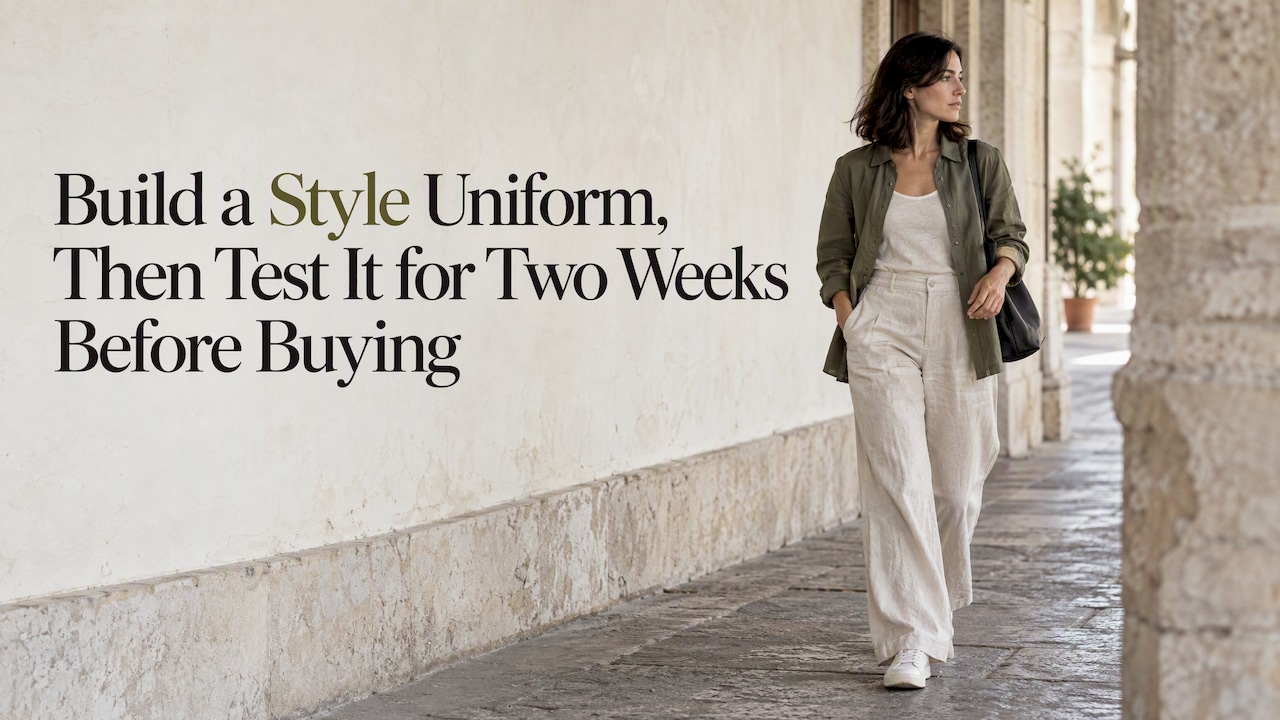
A style uniform is a repeatable outfit formula or a few signature pieces you wear on rotation, and it pays off in fewer daily decisions and a clearer personal look. You can start today with a simple outfit formula, such as a blazer, a white shirt, well-fitting jeans, and reliable shoes, then refine it through testing.
Key Takeaways
Creating a personal uniform simplifies daily dressing, enhances confidence, and optimizes wardrobe costs by focusing on versatile, signature pieces and consistent style choices.
| Point | Details |
|---|---|
| Start with descriptive words | Define the look you want to communicate using three to five words that reflect your style and lifestyle. |
| Build a core outfit formula | Create a repeatable outfit based on your wardrobe that suits your most frequent activities and fits your style rules. |
| Choose versatile staple pieces | Invest in essential items like a blazer, white shirt, well-fitting jeans, and comfortable shoes that support multiple outfits. |
| Test, refine, and shop smartly | Try outfits for two weeks, record their comfort and fit, then purchase only once you confirm their functionality. |
| We use Styletocart to streamline | Our platform helps save items, track prices, and build outfits, making it easier to develop and maintain your uniform. |
Table of Contents
- Why a personal uniform is worth trying
- How to define your style in three to five words
- Build a repeatable outfit formula
- Core pieces that support most uniforms
- How to test fit, laundering, and comfort
- Seasonal translation without losing the formula
- Run a two-week wardrobe test to lock it in
- Wendy’s take: a system beats a shopping list
- Make your uniform easier to build with Style To Cart
- FAQ
- Sources
Why a personal uniform is worth trying
The strongest case for a uniform is morning friction. The New York Times describes people who perfect a work uniform, including one example built on three identical suits and numerous white Oxford shirts, and the payoff is fewer daily decisions. GQ frames a uniform as self-imposed constraints that can actually create flexibility. You stop negotiating with your closet and start choosing from a short list of combinations that already work.
Repetition also does something for identity. When you wear a consistent silhouette and palette, your clothes begin to say the same thing every day, and people read that clarity as confidence. A uniform is not a costume, though. You can vary the shirt, the shoe, or the layer while the logic stays fixed.
Then there is cost per wear. A blazer you reach for regularly earns back its price far faster than a trend piece worn rarely. A uniform makes you shop for gaps instead of impulses, so every purchase has a job. That is the quiet financial benefit: fewer regret buys, and more of your budget going to the pieces you actually wear.
How to define your style in three to five words
Start with words, not clothes. The New York Times suggests describing the person you want your clothes to communicate in three to five words, such as polished, relaxed, practical, or dramatic. Then translate those words into repeatable silhouettes and materials rather than chasing isolated trend items. Our own guide to finding your style in 10 minutes walks through a similar exercise.
- Pick your words. Choose words that cover how you want to look, how you want to feel, and where you spend your days. “Relaxed, sharp, practical” works. “Cool” does not.
- Turn each word into a rule. “Sharp” might mean structured shoulders and hems that hit at the ankle. “Relaxed” might mean soft fabrics and a straight, easy leg. “Practical” might mean pockets and machine-washable materials.
- Name the pairings. Write down two or three combinations the rules produce, such as a structured jacket over a soft tee with straight trousers.
- Run the quick test. Find garments you already own that match the brief. If you can, the brief is real. If you cannot, the words describe a wish rather than your life, so adjust them.
Build a repeatable outfit formula
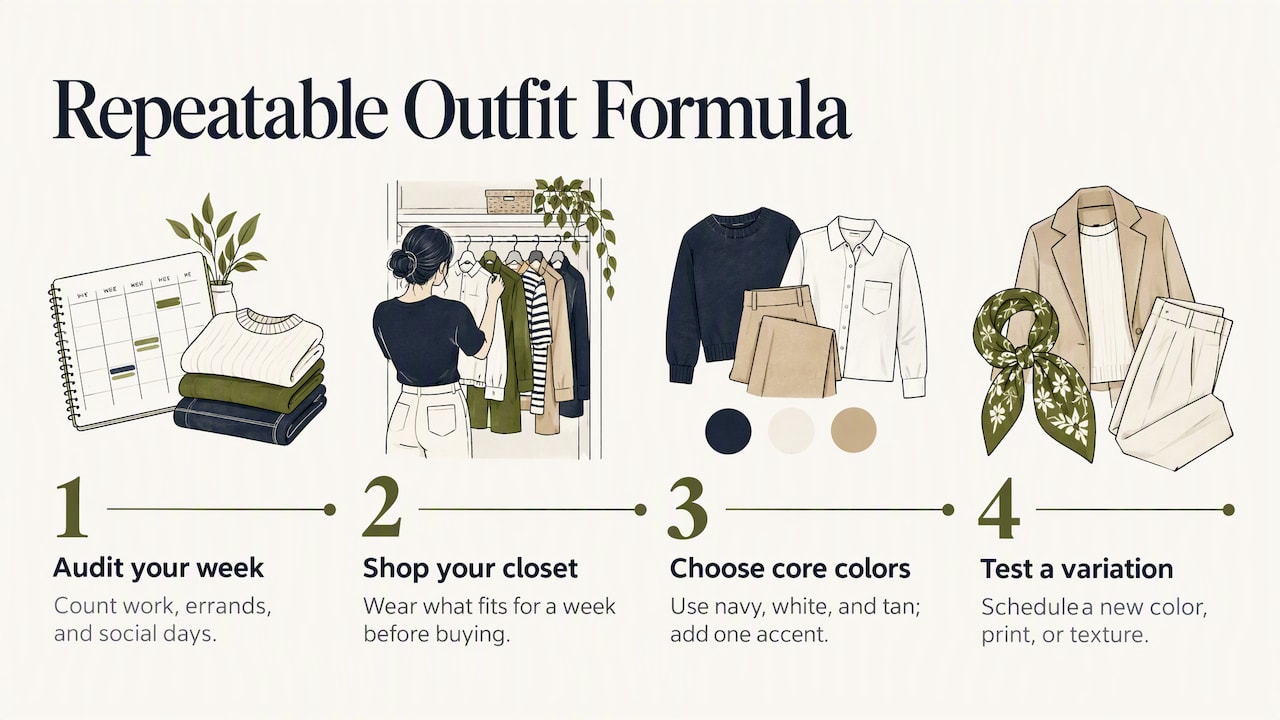
Begin with an honest audit of your week. Count how many days go to work, errands, and social plans, because the uniform has to serve the most frequent scenario first. Many people find it useful to have a base formula, for example “blazer, tee, straight jeans, loafers” for busy days and “knit, trousers, sneakers” for slow ones.
Next, go closet first. Pull out everything that fits the brief and wear it for a week before buying anything. Our post on how to shop your closet shows outfit tricks that stretch what you own, and our wardrobe staples checklist explains how to test whether a new anchor piece works with items you already have.
Then choose a restrained color system. Keep to a small group of core colors, for instance navy, white, and tan. Add one controlled point of difference, such as a single bold accessory or a repeated texture. Limited colors mean almost everything matches everything, which multiplies your combinations without adding a single item.
Be careful not to build a wardrobe so coherent it stops feeling like you. The New York Times has addressed breaking out of an all-black rut, and the lesson applies here: schedule occasional permission to test a new color, print, or texture.
Core pieces that support most uniforms
A capsule wardrobe is an intentional collection of versatile pieces, and Who What Wear’s list of capsule wardrobe items names blazers, white T-shirts, jeans, simple sneakers, boots, and a versatile coat among the common essentials. These are the pieces that carry most uniforms:
- Tailored blazer: dresses up jeans and sharpens a tee, so it covers work and evening with one purchase.
- White button-down: works under a blazer, open over a tee, or tucked into trousers, in any season.
- Well-fitting jeans or trousers: the base of nearly every formula, so fit matters more here than anywhere else.
- Neutral tees: the quiet layer that lets the heavier pieces do the talking.
- Reliable sneakers or loafers: one clean pair of each covers casual and polished days.
- Versatile coat: a neutral, mid-weight coat finishes whatever is underneath.
- Simple accessories: a belt, a watch, or a scarf adds your point of difference without changing the formula.
Spend more on what you wear most. A jacket or pair of shoes worn often deserves better construction than a tee you rotate with several others. Here are a few of our current picks to start from: a first favorite, a second option, a third find, and a fourth staple.
The final rule is sequence: test first, buy multiples second. Our guide to building a closet you actually wear covers the prioritizing in more detail.
How to test fit, laundering, and comfort
GQ stresses that fit, authenticity, and quality matter more than copying an icon, and that each prospective piece should be tested in real life: sitting, walking, layering, laundering, and pairing with several existing items. Run that protocol over a trial period for any candidate anchor.
Sit in it and notice whether it pinches or rides up. Walk in it, including stairs and a commute. Layer it under and over other pieces. Wash it and see how it shrinks, wrinkles, or fades. Pair it with other items, and write down which pairings felt right.
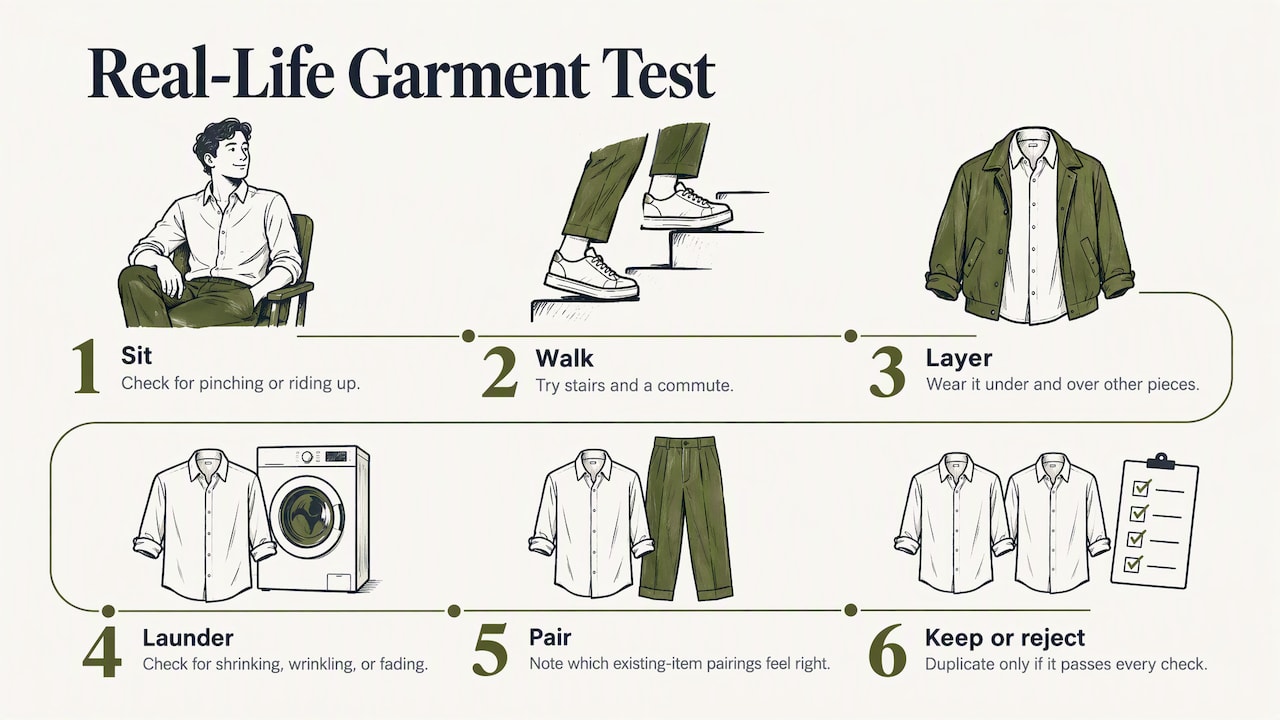
Duplication is smart only after a piece survives all of that. The New York Times notes that when a signature item solves a recurring dressing problem, buying multiples can be rational, but otherwise duplication locks in an expensive mistake. A shirt that wrinkles badly becomes five wrinkly shirts.
Pro Tip: Log a few wear-and-launder cycles in your notes app before you buy a second one. If it still looks good after repeated washing, it has earned a duplicate.
Seasonal translation without losing the formula
A uniform should survive the calendar. Who What Wear points out that a successful winter uniform may need fabric or exposure changes in warm weather, and its piece on fashion people wearing uniforms instead of trends shows the logic holding up across seasons. Keep the silhouette and the color system, and swap materials, layers, and shoes.
- Blazer, tee, straight jeans, loafers in winter becomes linen blazer, tee, straight jeans, sneakers in summer. Same shape, same navy and white, lighter fabric, more ankle.
- Wool knit, trousers, boots in winter becomes cotton knit or short-sleeve polo, the same trousers in a lighter weave, and leather sandals or clean sneakers in summer. The proportions barely move, only the weight does.
On dressier occasions, upgrade the shoe and the outer layer first. The formula stays recognizable, which is the whole point.
Run a two-week wardrobe test to lock it in
Treat the coming days as an experiment. Wear two or three variants of your formula, and record what happens each evening.
- Track comfort: note when you felt good and when you shifted or adjusted all day.
- Track laundering: record which pieces needed ironing, shrank, or faded.
- Note failures and wins: a combination you repeatedly skipped is data too.
- Build a morning template: decide the formula the night before, so the only choice in the morning is which version.
- Use the three item travel rule: pack three tops, three bottoms, and three layers that all mix.
- Pick a primary and a backup: after the test, promote the winner to your main formula and keep the runner-up for variety.
Wendy’s take: a system beats a shopping list
I have spent years planning wardrobes and writing practical fashion content, and the pattern repeats: people who define a system dress well with less effort than people who chase pieces. I recommend the two-week test because it replaces guessing with evidence. We built Style To Cart so the clothing items you find do not disappear into screenshots, since you can save them, style outfits with pieces you own, and keep your finds in one place. Run the test, then save what works.
— Wendy
Make your uniform easier to build with Style To Cart
Testing a uniform means keeping track of a lot: pieces you own, pieces you want, and the outfits that worked. Style To Cart lets you save items from any store into one wishlist, build outfits with pieces you already own, and track price drops on anything you saved. During your test, we suggest saving each winning combination as you wear it, so your primary and backup formulas are ready to reuse.
When you spot an anchor piece that passes your tests, save it and wait for a price drop before buying. Ready to shop now? Here are a few more finds worth saving: one, two, and three. Start your uniform at Styletocart.
FAQ
What is the 3-3-3 rule for clothing?
It is a simple capsule shortcut: pick three tops, three bottoms, and three layers or shoes that all mix with each other. We find it works best as a travel or testing rule inside your own color system, rather than as a fixed formula.
How do you style a school uniform?
Keep the required pieces and personalize the details you control, such as shoes, socks, a belt, a bag, and one accessory. Fit also matters: a well-fitted version of the same garment looks noticeably more deliberate.
What are the best pieces to start a style uniform with?
Start with the staples you already wear most, then add anchors that work in at least three outfits. Who What Wear’s capsule list names blazers, white T-shirts, jeans, simple sneakers, boots, and a versatile coat among common essentials.
How long should I test a uniform before buying multiples?
Test for two to four weeks, including real washing cycles. Buy duplicates only after a piece has proven its fit, comfort, and versatility.
Sources
- How to Perfect the Art of a Work Uniform - The New York Times
- How to Find Your Personal Style, According to Menswear Experts | GQ